What Are the Fundamental Pillars of Digital Transformation?

TL;DR
- This article covers the core pillars underpinning successful digital transformation initiatives, especially within the context of Salesforce CRM and AI analytics. It explores how data intelligence, customer-centricity, process automation, and adaptable technology architectures are crucial for enterprises aiming to modernize and gain a competitive advantage. We'll look at practical strategies and real-world examples to guide your digital transformation journey.
Introduction: The Imperative of Digital Transformation
Okay, so digital transformation, right? It's not just a buzzword anymore; it's kinda do-or-die for a lot of businesses, honestly. Are you still doing things the old way? You might be getting left behind!
Digital transformation is essentially the process of using digital technologies to create new—or modify existing—business processes, culture, and customer experiences to meet changing business and market requirements. It's about fundamentally changing how you operate and deliver value to your customers.
- It's about getting a competitive edge. Think about it; those companies that moves fast and adapt quickly? They are winning.
- It's also about meeting customer expectations. Customers expect seamless experiences these days. (Putting The Customer Back In Customer Experience - Forbes) Like, in healthcare, patients want easy online appointment scheduling, not endless phone calls.
- Then theres improving efficiency. Retailers are using ai to optimize supply chains and predict demands, which is pretty smart.
- And of course, data-driven decisions. Finance firms are using data to personalize investment strategies, which, you know, makes sense.
Basically, don't be late to the party. Let's break down what makes it all happen.
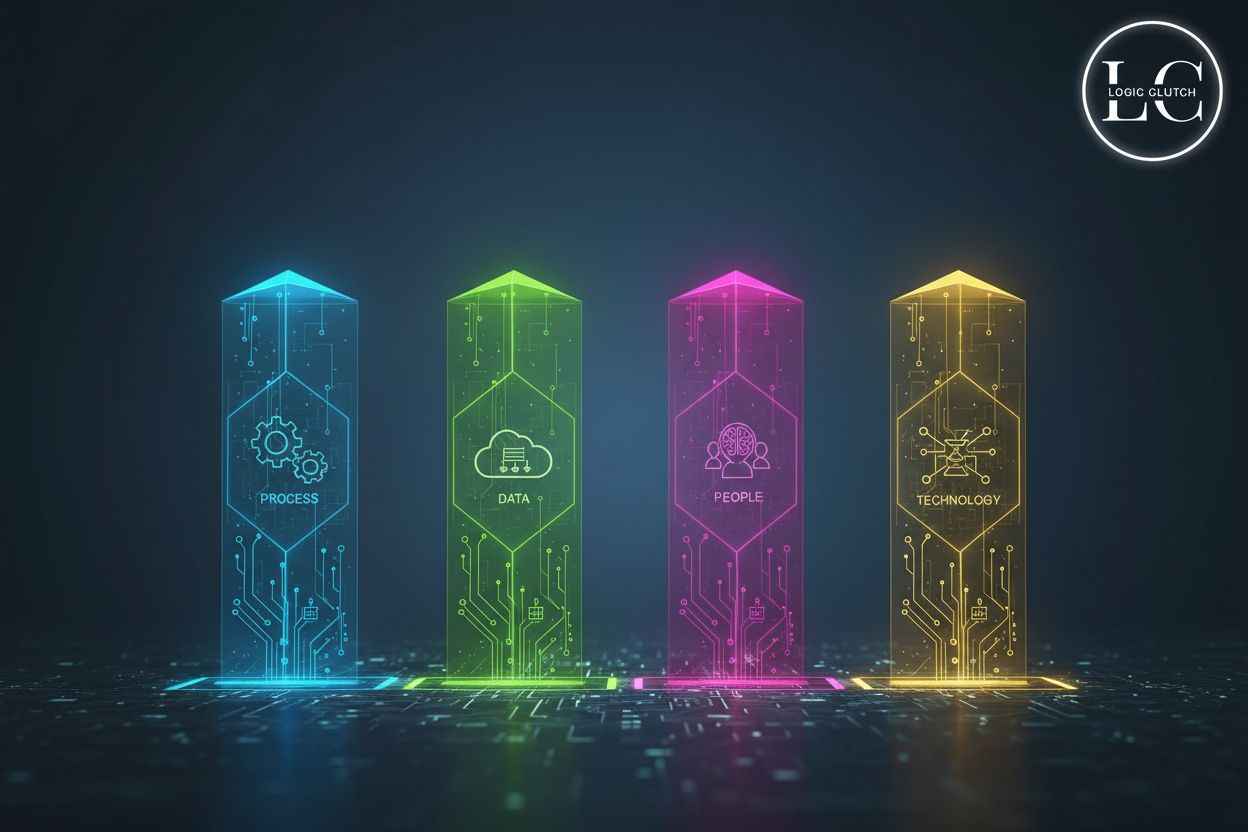
Pillar 1: Data Intelligence and Insights
Okay, so you've got all this data... but what do you do with it? That's where data intelligence comes in, and honestly, it's the backbone of any successful digital transformation.
Data is incredibly valuable, but only if it's properly processed and analyzed. Everyone says it's the new oil, but it's true! It's valuable, but only if you refine it. We're talking about collecting data from everywhere - your crm, social media, even iot devices. Think about a hospital tracking patient data from wearable sensors to predict potential health crises before they even happen; pretty cool huh?
Then comes the not-so-fun part: Cleaning it all up. You gotta clean, process, and analyze that mountain of info. No one wants garbage data messing up their insights. Imagine a retailer using ai to analyze customer purchase histories, but because of messy data, they are sending winter coat ads to people in Florida. That's a waste of money, time and energy!
Turning insights into action is key. It's about making the right decisions, faster. This involves translating raw data into actionable strategies, like developing specific business initiatives or modifying existing processes based on what the data tells you. A finance firm might use ai to detect fraudulent transactions in real-time, protecting customers and preventing losses. Or even better, a manufacturing company using predictive maintenance to anticipate equipment failures, which saves them money and downtime.
salesforce einstein, for example, uses ai to give you predictive analytics, which is pretty nifty. you can spot trends, nail opportunities, and make customer experiences way more personal. Plus, your forecasting and decision-making get a serious boost. it's like having a super-smart ai assistant crunching numbers 24/7.

Master data management (mdm) is another piece of the puzzle. It's all about making sure your data is accurate and consistent. No more data silos, better data governance, and easier compliance. In the end, it helps you maintain trust with your customers, which is priceless.
Pillar 2: Customer-Centricity and Personalized Experiences
Did you know that companies with strong customer relationships outperform their competitors by nearly 80%? That's why customer-centricity is so vital to digital transformation. It's not just about having a good product; it's about creating experiences that make customers feel valued and understood.
So what does customer-centricity actually mean? It's about putting the customer at the heart of everything you do. It means:
- Mapping the Customer Journey: You gotta know where your customers are coming from, what they're doing, and what they're feeling at each touchpoint. Common methods for mapping include customer surveys, analyzing website analytics, and conducting user interviews. Think about a hospital. Are patients struggling to book appointments online? Is the check-in process a nightmare? Knowing this helps you fix the problems.
- Identifying Pain Points: What's bugging your customers? What's causing them frustration? These pain points are typically identified through feedback mechanisms, support tickets, or direct observation. Maybe an e-commerce site has a clunky checkout process, leading to abandoned carts. Or a bank has ridiculously long wait times on the phone and if that happens you can bet those customers are walking out the door.
- Seamless and Consistent Experiences: Customers expect consistency across all channels. Achieving this requires integrated systems and omnichannel strategies. If a customer starts a conversation with a chatbot on your website, they should be able to pick up where they left off when they call customer service.

Customer relationship management (crm) systems, like salesforce, are essential for centralizing customer data. It's like having a single source of truth for everything about your customers. This empowers your sales, service, and marketing teams to provide better, more personalized experiences.
Leveraging ai, you can analyze customer data to predict their needs and preferences. Imagine a streaming service using ai to recommend shows based on your viewing history. Or a retailer sending personalized offers based on your past purchases. It's all about making the customer feel like you "get" them.
Pillar 3: Process Automation and Efficiency
Okay, so, picture this: you're drowning in paperwork, doing the same thing over and over again. Process automation? It's like a life raft. It's about making things smoother, faster, and, honestly, way less boring.
- Streamlining workflows is all about finding those repetitive tasks that eat up your time. Identifying these tasks can be done through process mapping or employee feedback. Think about automatically routing customer inquiries to the right department. No more manual sorting!
- Automating tasks with tools like Salesforce's Workflow Rules, Process Builder, and Flows can seriously cut down on errors. These tools achieve automation by defining rules and triggers that execute specific actions. A simple example? Automatically updating a contact's information when they submit a form on your website.
- Reducing errors is a big win. Manual data entry? Prone to mistakes. Automation? Much more accurate. Imagine a healthcare provider automatically verifying insurance eligibility – fewer claim denials, less headaches.
- Freeing up employees for strategic initiatives is the real goal. Instead of spending hours on mundane tasks, your team can focus on innovation and growth, like developing new product features, expanding into new markets, or improving customer engagement strategies.

Plus, ai is getting in on the action, automating decision-making in some cases. Pretty wild, huh?
Pillar 4: Adaptable Technology Architecture
Ever tried building a house on a shaky foundation? Digital transformation is kinda the same, and your tech architecture is that foundation.
Cloud-based solutions? Total game-changer. They give you the agility to scale up or down as needed, through elastic scaling and on-demand resource allocation. Think about a retail company prepping for black friday; they need to be able to handle a huge spike in traffic, and cloud infrastructure lets them do just that, without crashing.
api integrations are crucial. it's how different systems talk to each other, enabling data sharing, creating unified experiences, and fostering innovation. imagine a healthcare provider needing to share patient data securely between different departments. apis make that possible.
Microservices architecture, though? It's like breaking down a giant app into smaller, manageable parts. if one part fails, the whole thing doesn't go down. This also leads to faster development cycles and independent deployment. a finance firm might use microservices for different banking functions, so if the payment processing system has a hiccup, it doesn't take down the entire online banking platform.

Future-proofing your tech investments is also super important. You don't want to be stuck with outdated systems in a few years, right? This can be achieved by choosing flexible platforms, adopting modular designs, and continuously evaluating new technologies. It's about building something that can adapt to new technologies and changing business needs.
Salesforce, for instance, can be much more than just a CRM. Its platform extends to marketing automation, customer service, analytics, and even custom app development, allowing businesses to build a truly integrated digital ecosystem around their customer data.
Conclusion: Embracing the Pillars for Digital Success
So, you've made it this far, huh? Digital transformation isn't just a one-time thing, it's more like a never-ending quest. This is because technologies are constantly evolving, market demands are always changing, and there's always room for ongoing optimization.
- Remember data intelligence? It's not just about collecting data, but actually, you know, understanding it and using it to make smart moves. A hospital might use ai to predict patient readmissions, which is pretty crucial.
- Then there's customer-centricity. Like we talked about, put the customer first, always. A retailer could use crm data to personalize email campaigns, making customers feel valued.
- Don't forget process automation. Freeing up your team to do, like, actual work instead of boring repetitive tasks? A win-win!
- and of course adaptable tech, so you're not stuck in the stone age in a couple years.
Keep learning, keep trying new things, and don't be afraid to shake things up, you know?